
What Is Automotive Injection Molding? Complete Technical Guide
2026-10-23


SHD specializes in one-stop service of general and high-precision tooling from design, processing & fabrication, tooling trail, mass production to supply chain management.
Excellence Manufacturing Every Time
Automotive injection molding has become one of the most important manufacturing technologies in the modern automotive industry. As vehicle manufacturers continue to demand lightweight structures, complex designs, and high production efficiency, injection molding plays a critical role in producing durable and cost-effective plastic automotive components.
From interior trims to engine parts, automotive injection molding helps manufacturers achieve high precision, stable quality, and large-scale production efficiency.
Automotive injection molding is a manufacturing process that injects molten plastic materials into precision molds to create automotive parts with consistent shapes and dimensions.
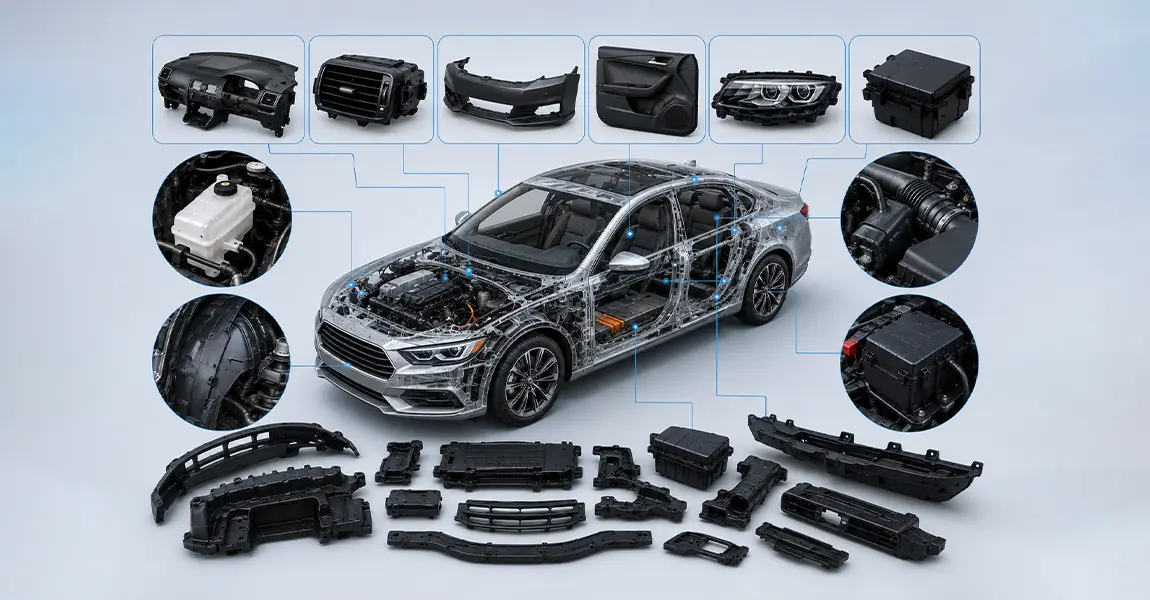
The process is widely used for producing:
The automotive industry requires components that are lightweight, durable, and cost-efficient. Injection molding offers several advantages that make it ideal for automotive production.
Injection molding enables rapid cycle times and large-scale manufacturing, making it suitable for mass automotive production.
Precision molds ensure consistent part dimensions and stable product quality, which are critical for automotive assembly.
Plastic injection molded parts help reduce overall vehicle weight, improving fuel efficiency and supporting electric vehicle development.
Injection molding can produce complicated geometries, integrated structures, and detailed surface textures that are difficult to achieve with traditional manufacturing methods.
Different automotive applications require different plastic materials depending on strength, heat resistance, and flexibility requirements.
| Material | Main Features | Common Automotive Applications |
| PP (Polypropylene) | Lightweight and cost-effective | Interior trims, bumpers |
| ABS | Good impact resistance | Dashboard and panels |
| PA (Nylon) | High strength and heat resistance | Engine components |
| PC | Excellent transparency and toughness | Lighting systems |
| Glass Fiber Reinforced Plastics | High rigidity and durability | Structural automotive parts |
| TPU | Flexible and wear-resistant | Seals and protective covers |
Although injection molding provides many benefits, manufacturers still face technical challenges during production.
Large automotive components may deform due to uneven cooling or material shrinkage.
Glass fiber reinforced materials can cause severe abrasion on mold surfaces during long-term production.
Flow marks, weld lines, and sink marks can affect the appearance and quality of automotive interior parts.
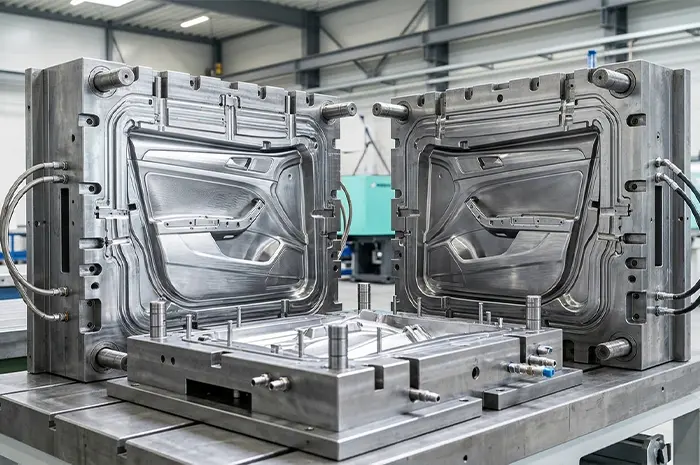
Automotive products often require multi-cavity molds, hot runner systems, and advanced cooling designs.
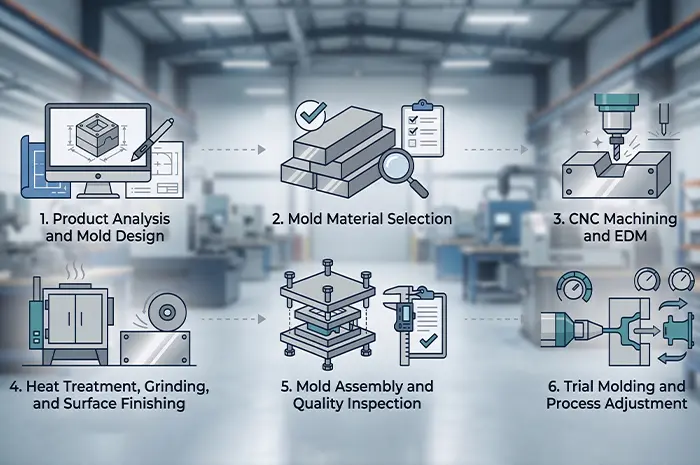
SHD can improve molding quality and production stability through optimized mold design and process control.
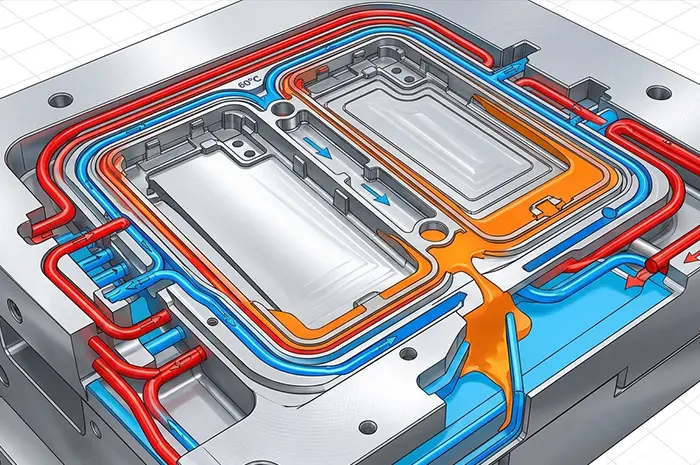
Efficient cooling channels reduce cycle time and minimize warpage problems.
Using hardened steel and special surface treatments can improve mold durability when processing reinforced plastics.
Precise control of injection pressure, temperature, and holding time helps improve product consistency.
Simulation software helps engineers optimize gate locations, flow balance, and cooling performance before mold manufacturing.
Conclusion:
Automotive injection molding is a key manufacturing technology that supports modern vehicle production with high precision, lightweight structures, and efficient mass production capabilities.
By using advanced mold designs, optimized cooling systems, and suitable engineering materials, manufacturers can overcome production challenges and improve automotive component quality.
As the automotive industry continues to evolve, injection molding will remain essential for producing innovative, durable, and cost-effective vehicle parts.
Q1: What is automotive injection molding used for?
A: Automotive injection molding is used to manufacture plastic vehicle components such as dashboards, bumpers, door panels, engine covers, and lighting parts.
Q2: Why is injection molding important in the automotive industry?
A: It provides high production efficiency, lightweight components, dimensional accuracy, and cost-effective mass production.
Q3: What are the main challenges in automotive injection molding?
A: The main challenges include warpage, shrinkage, mold wear, surface defects, and complex mold structures.
Q4: How can manufacturers reduce warpage in automotive parts?
A: Manufacturers can optimize cooling systems, improve mold design, and control molding parameters to reduce deformation.
Q5: Why are glass fiber reinforced materials popular in automotive applications?
A: They offer high strength, rigidity, and durability while helping reduce vehicle weight.

Tel/Whatsapp: +86 15062600514
E-mail: sales@shdmold.com

Email: sales@shdmold.com
Address: NO.199, TongQiu Road, Zhangpu Town, Kunshan City, Jiangsu, China
Mobile: +86 15062600514