
What Is Automotive Injection Molding? Complete Technical Guide
2026-10-23


SHD specializes in one-stop service of general and high-precision tooling from design, processing & fabrication, tooling trail, mass production to supply chain management.
Excellence Manufacturing Every Time
Automotive injection molding is a manufacturing process used to produce plastic parts for cars, trucks, and other vehicles. It involves melting plastic material, injecting it into a mold under pressure, and allowing it to cool before removing the finished part.
Today, automotive manufacturers use this process to make a wide range of components. Common examples include dashboards, door panels, instrument housings, air vents, clips, and electrical connectors.
The main advantage is consistency. Once the mold and processing conditions are properly set, manufacturers can produce large quantities of parts with similar dimensions and surface quality. This makes automotive injection molding suitable for both interior and exterior components.
However, producing automotive plastic parts requires more than simply injecting plastic into a mold. Material selection, mold design, dimensional accuracy, and process control all affect the final result.
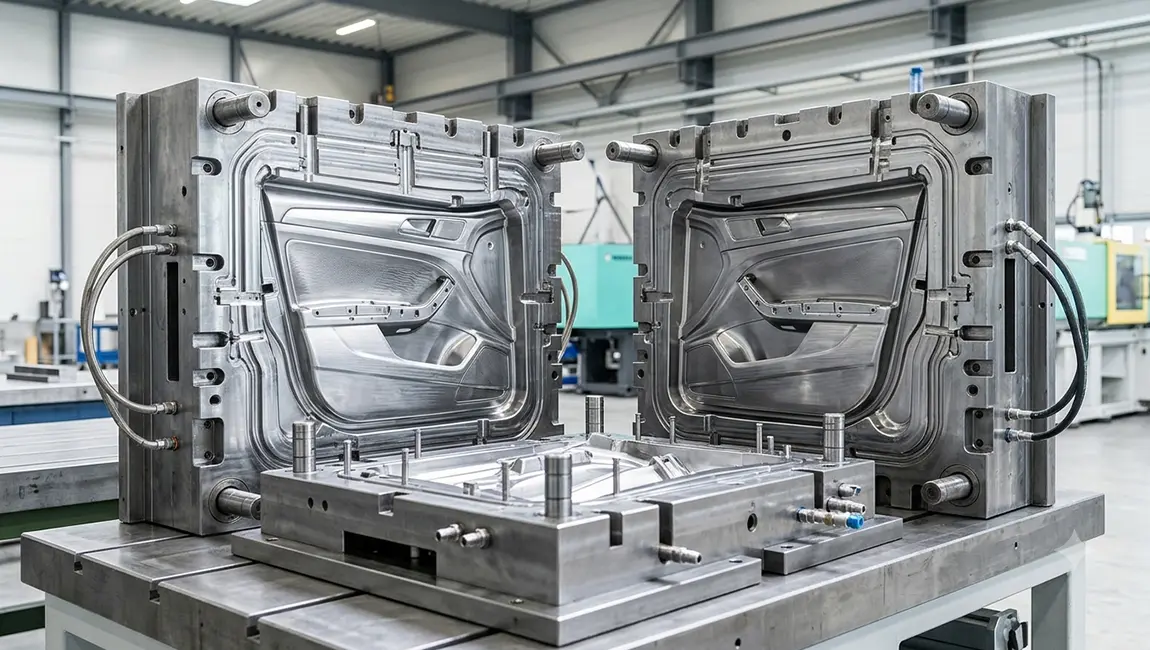
Although the equipment and mold structure may vary by application, the basic process follows several steps.
The process starts with plastic pellets selected for the part’s intended use. Common materials include polypropylene (PP), ABS, polyamide (PA), and polycarbonate (PC).
Each material has different properties. For example, PP is widely used for interior trim because of its low weight and chemical resistance. ABS offers a good balance of impact resistance and surface finish, while PA is often selected for functional components that require mechanical strength.
Some materials also require drying before processing to reduce moisture-related defects.
The plastic pellets enter a heated barrel, where they melt and become a viscous material. A rotating screw then moves the molten plastic toward the injection unit.
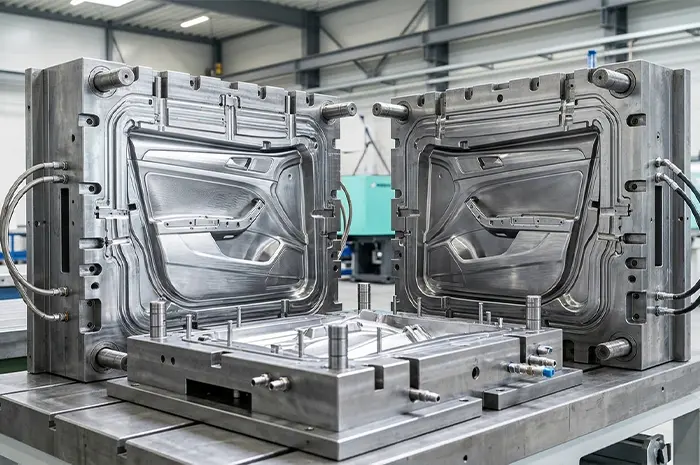
The machine injects the material into the closed precision injection mold at a controlled speed and pressure. The mold cavity determines the shape and main dimensions of the component.
Proper injection settings help reduce common problems such as short shots, flash, and uneven filling.
After the cavity fills, the machine maintains pressure for a specified period. This packing stage helps compensate for material shrinkage as the plastic cools.
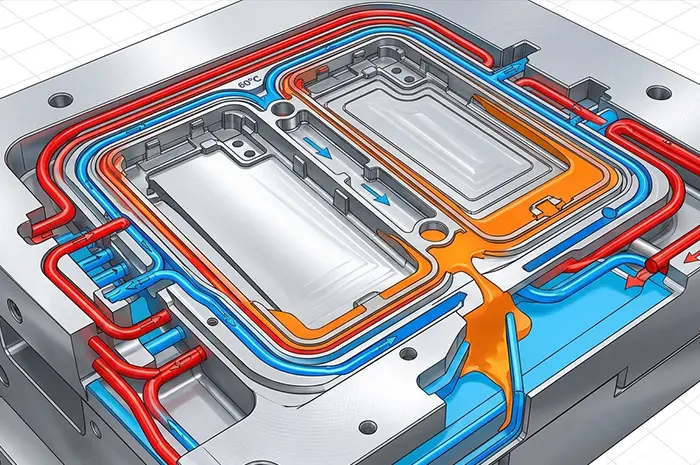
Cooling follows, allowing the part to become sufficiently rigid for ejection. The cooling system is particularly important because uneven temperatures can cause warpage, dimensional variation, and longer cycle times.
Once the part has cooled, the mold opens and the ejection system releases the component. Depending on the product, additional operations may include trimming, drilling, assembly, painting, or surface finishing.
The finished parts are then inspected against the required specifications.
Automotive injection molding supports many applications, from small functional components to large visible panels.
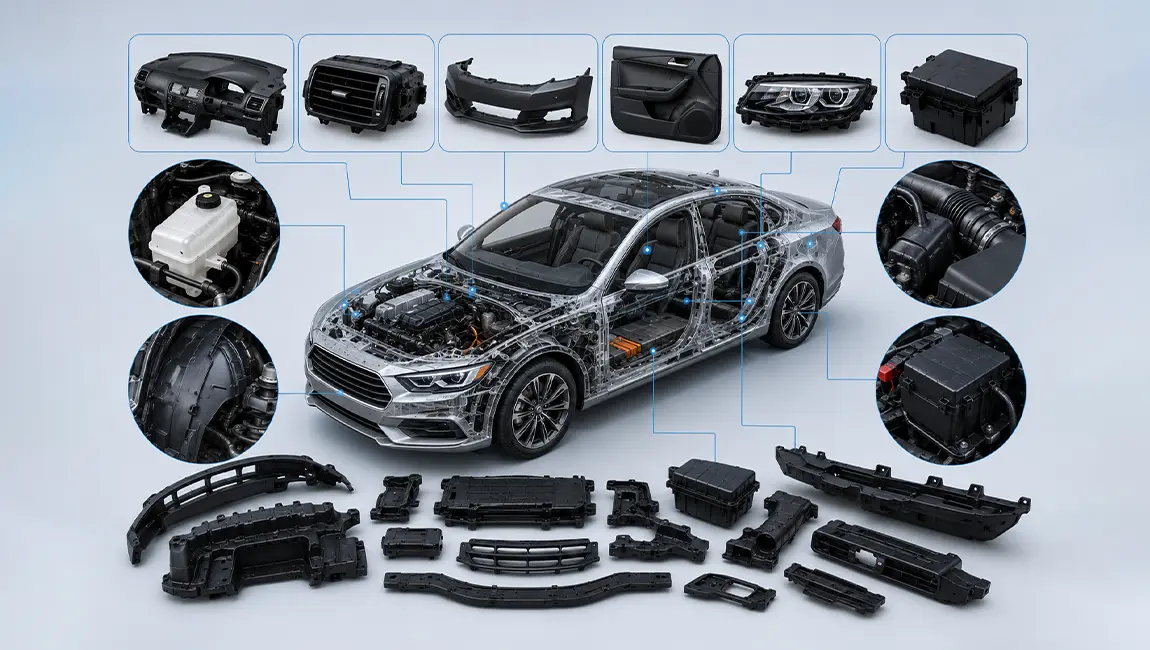
The automotive injection mold has a direct effect on part quality, production speed, and manufacturing cost. A well-designed mold helps maintain consistent dimensions while reducing defects and unnecessary downtime.
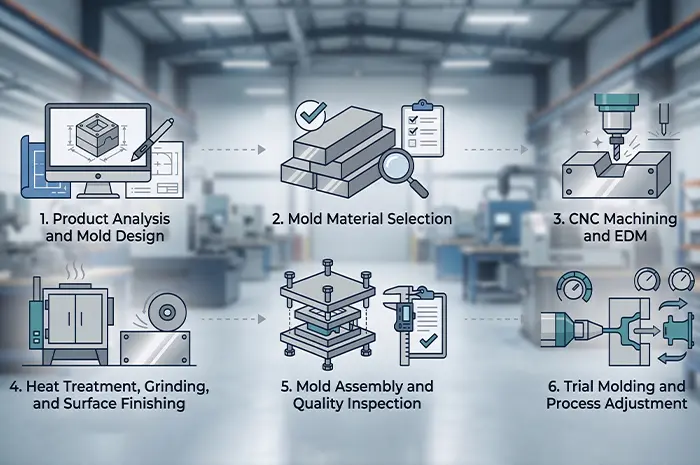
Several factors deserve attention during mold development.
At SHD, careful consideration of mold structure, material characteristics, and dimensional requirements helps support reliable injection mold manufacturing. Early design reviews can also help identify potential issues before production begins.
Improving efficiency does not always mean increasing injection speed. A better approach is to identify the factors that cause defects, long cycle times, or frequent mold maintenance.
First, manufacturers should review the part design and mold layout before production. Uniform wall thickness, suitable gate positions, and effective cooling can reduce common molding problems.
Next, process parameters should be established through mold trials and validated for repeatable production. Simply increasing pressure or temperature may solve one problem while creating another.
Regular maintenance also matters. Cleaning vents, checking the ejection system, inspecting cooling channels, and monitoring wear can help extend mold service life.
For high-volume automotive production, these improvements can reduce scrap, stabilize output, and lower the cost per part over time.
Automotive injection molding is an important manufacturing method for producing lightweight, repeatable plastic components used throughout modern vehicles. Its success depends on the relationship between material properties, mold design, machine performance, and process control.
A properly engineered automotive injection mold can support consistent part quality and efficient mass production. By addressing potential issues during design and validating the molding process before full-scale production, manufacturers can reduce rework and achieve more reliable results.
A: It is used to manufacture plastic automotive components such as dashboards, door panels, connectors, trim parts, and protective housings.
A: Common materials include PP, ABS, PA, and PC. The choice depends on strength, temperature resistance, appearance, and the component’s working environment.
A: It is a precision tool that contains one or more cavities used to shape molten plastic into a specific automotive component.
A: Common causes include incorrect processing parameters, poor mold venting, uneven cooling, material moisture, and unsuitable part design.
A: They can improve mold design, select suitable materials, optimize processing parameters, maintain equipment, and carry out regular quality inspections.

Tel/Whatsapp: +86 15062600514
E-mail: sales@shdmold.com

Email: sales@shdmold.com
Address: NO.199, TongQiu Road, Zhangpu Town, Kunshan City, Jiangsu, China
Mobile: +86 15062600514