
What Is Automotive Injection Molding? Complete Technical Guide
2026-10-23


SHD specializes in one-stop service of general and high-precision tooling from design, processing & fabrication, tooling trail, mass production to supply chain management.
Excellence Manufacturing Every Time
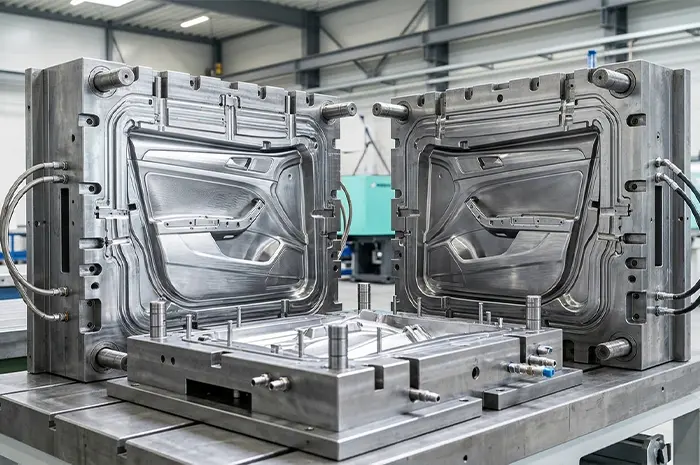
Precision injection molding plays an important role in producing plastic components with tight tolerances, consistent dimensions, and reliable surface quality. From automotive parts and electronic housings to medical components and industrial products, manufacturers depend on well-designed molds to maintain product consistency during mass production.
However, producing a precision injection mold involves much more than machining a steel block. Every stage, from product design to final mold testing, affects the quality of the finished plastic part.
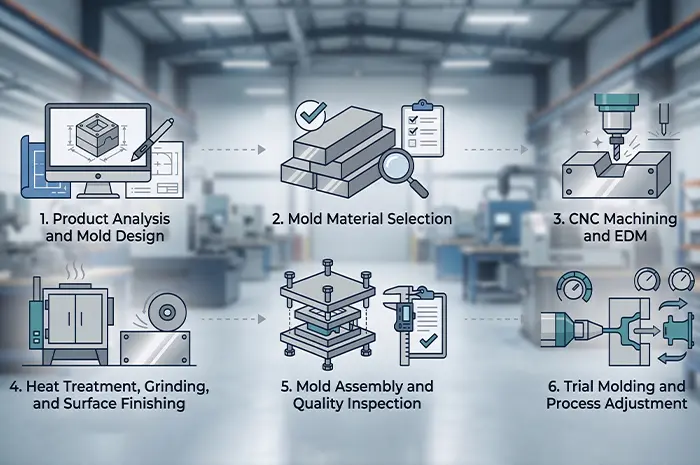
The manufacturing process begins with a detailed review of the plastic component and its production requirements. Engineers then develop the mold structure, select suitable materials, machine the critical features, and verify performance through trial molding.
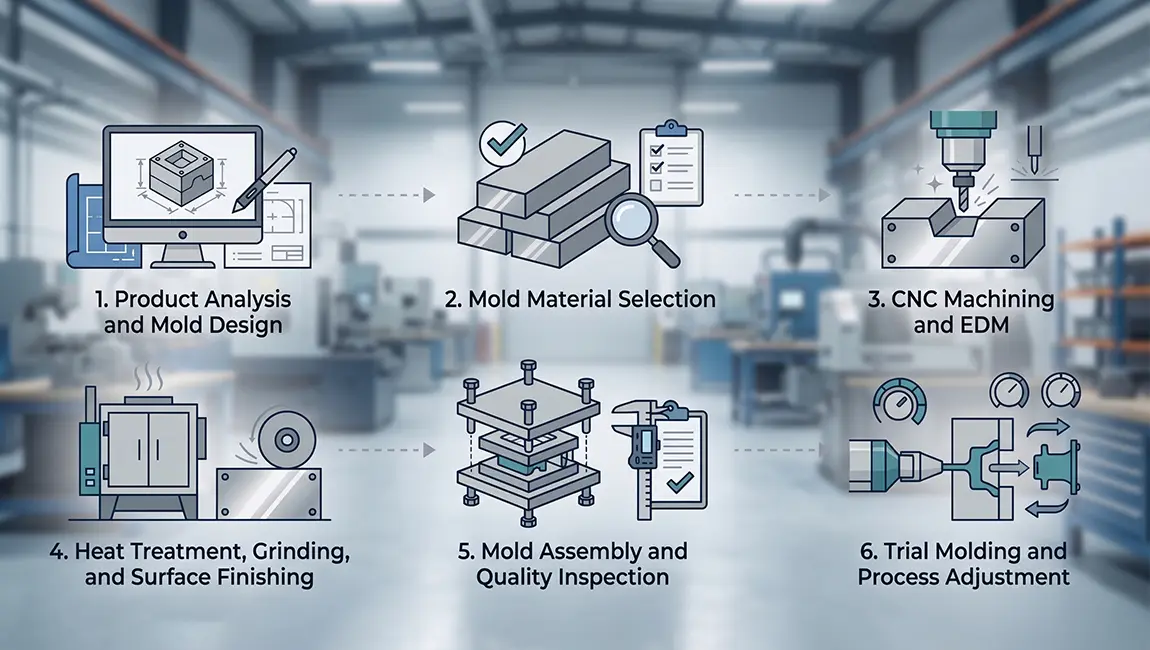
Before manufacturing starts, engineers evaluate the product’s geometry, wall thickness, material properties, dimensional tolerances, and expected production volume. These factors help determine the mold structure and the most suitable manufacturing approach.
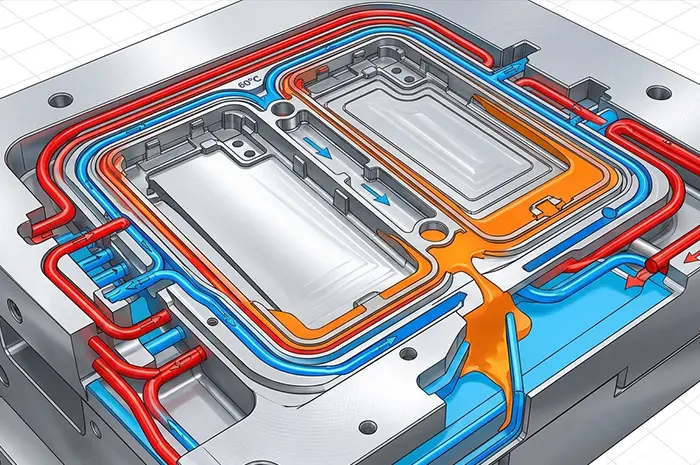
Using CAD software, designers create a 3D mold model that defines the cavity, core, runner system, cooling channels, and ejection mechanism. Mold flow analysis may also be used to identify potential filling problems, air traps, and uneven shrinkage before machining begins.
Addressing these issues early can reduce costly design changes later.
The choice of mold steel depends on the application, production volume, plastic material, and required surface finish. Hardened tool steel is commonly used for demanding applications that require wear resistance and long service life. Pre-hardened steel may suit other production requirements, while aluminum molds can be considered for prototypes or shorter production runs.
Material selection also affects machining time, heat treatment requirements, maintenance costs, and the mold’s ability to maintain dimensional accuracy over repeated cycles.
Once the mold design and materials are confirmed, machining begins. CNC milling removes material to create the mold base, core, cavity, and other structural features. High-speed machining can produce complex geometries while maintaining the required dimensions.
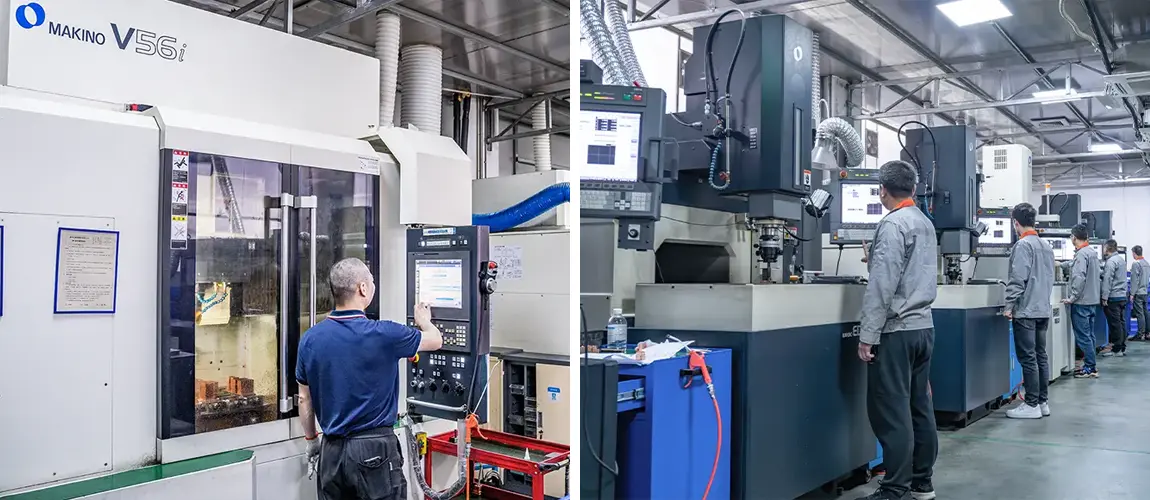
Electrical discharge machining (EDM) is often used for deep ribs, narrow slots, sharp internal corners, and other features that are difficult to produce through conventional cutting. Depending on the design, wire EDM may also be used to manufacture precise profiles.
Some mold components require heat treatment to achieve the necessary hardness and wear resistance. Because heat treatment can introduce dimensional changes, critical surfaces may need additional grinding or finishing afterward.
Polishing, texturing, or other surface treatments are then applied according to the product’s appearance and functional requirements. A high-gloss cosmetic component may need a different finish from a textured automotive interior part.
At this stage, careful inspection is essential. Even small dimensional deviations or surface defects can affect part appearance, assembly, or mold performance.
After machining and finishing, the mold components are assembled. Engineers check the alignment of the core and cavity, the fit of moving parts, the operation of the ejection system, and the sealing of cooling channels.
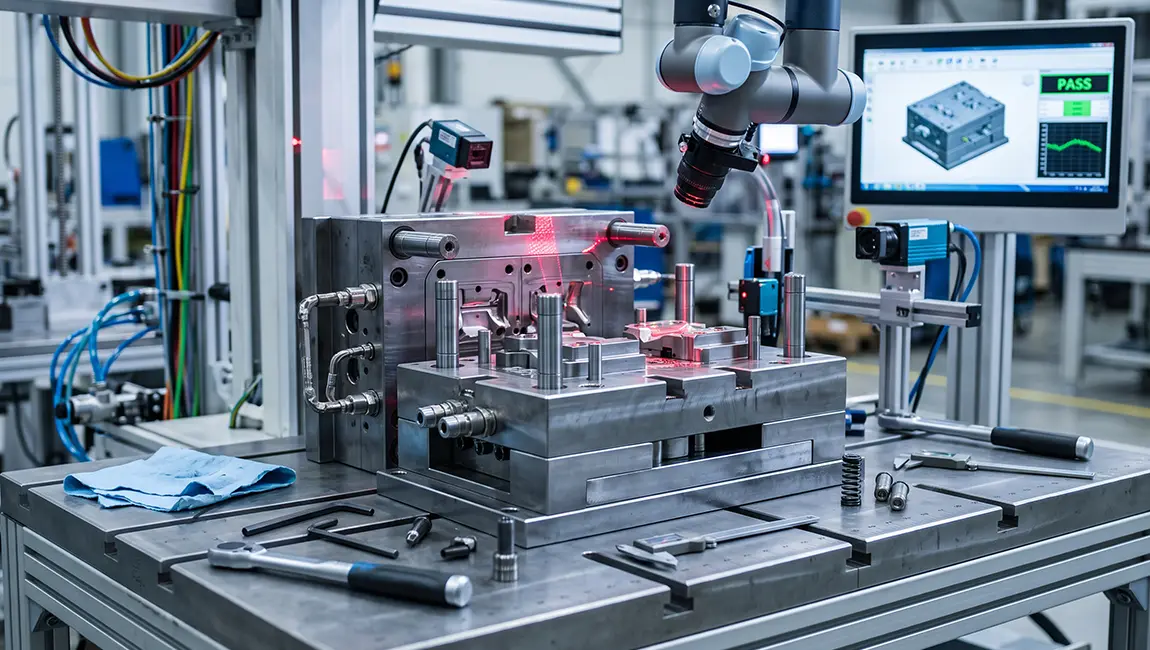
Dimensional inspection may involve coordinate measuring machines (CMMs), precision gauges, and other measurement equipment. The objective is to confirm that critical features meet the drawing specifications before the mold enters production trials.
Proper assembly also helps prevent flash, uneven wear, and premature component failure.
A completed mold must be tested on an injection molding machine before it is released for regular production. During the mold trial, engineers evaluate filling behavior, cooling performance, ejection, surface quality, and the dimensions of the molded parts.
Adjustments may be needed to injection pressure, melt temperature, holding pressure, cooling time, or mold components. The team then checks whether the parts consistently meet the specified requirements.
At SHD, careful mold evaluation and trial testing help identify potential issues before full-scale production, supporting more consistent part quality and reliable mold performance.
As plastic components become more complex, injection mold manufacturers face increasing demands for tighter tolerances, improved surface quality, and shorter development cycles. Integrating design simulation, precision machining, measurement, and trial molding helps identify problems earlier and reduce unnecessary rework.
For buyers, evaluating a mold supplier should involve more than comparing quotations. Design support, machining capabilities, inspection procedures, trial results, and after-sales service all contribute to the mold’s overall value.
A well-manufactured precision injection mold can help reduce scrap, improve production stability, and support consistent product quality over its service life. SHD focuses on mold manufacturing requirements that help customers achieve dependable results in plastic part production.
A: It is a mold designed to produce plastic parts with accurate dimensions and consistent quality.
A: The process includes design, material selection, CNC machining, EDM, finishing, assembly, inspection, and trial molding.
A: Common choices include pre-hardened steel, hardened tool steel, and aluminum, depending on the application.
A: Manufacturers use CMMs, precision gauges, and trial-molded part measurements.
A: Use suitable materials, optimize cooling, and perform regular cleaning, inspection, and maintenance.

Tel/Whatsapp: +86 15062600514
E-mail: sales@shdmold.com

Email: sales@shdmold.com
Address: NO.199, TongQiu Road, Zhangpu Town, Kunshan City, Jiangsu, China
Mobile: +86 15062600514