
What Is Automotive Injection Molding? Complete Technical Guide
2026-10-23


SHD specializes in one-stop service of general and high-precision tooling from design, processing & fabrication, tooling trail, mass production to supply chain management.
Excellence Manufacturing Every Time
In plastic parts manufacturing, the quality of an injection mold directly affects product performance, production efficiency, and overall manufacturing cost. A well-designed mold helps improve dimensional accuracy, reduce molding defects, and ensure stable mass production.
For industries such as automotive components, medical devices, electronics, household products, and industrial plastic parts, mold design is more than simply creating a cavity shape. It requires comprehensive engineering consideration, including product structure analysis, material selection, cooling system design, gate optimization, and precision machining.
As a professional injection mold supplier, SHD focuses on developing high-quality precision injection mold solutions for customers who require reliable plastic parts production. Through advanced mold design technology and strict manufacturing control, SHD helps customers achieve efficient and stable injection molding processes.
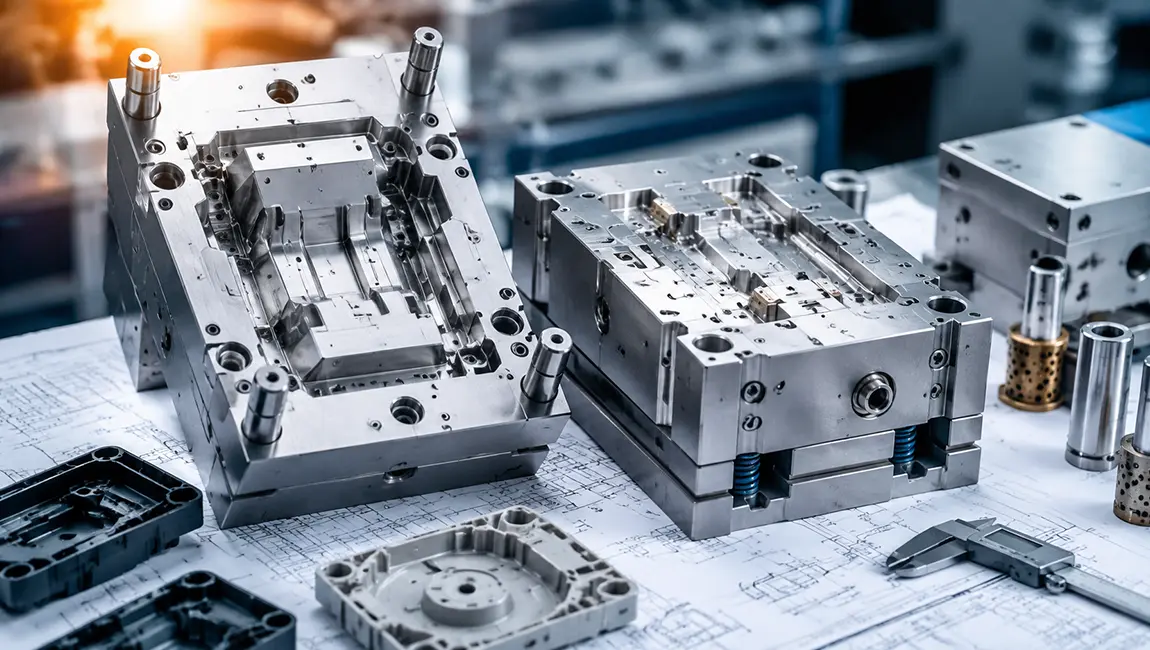
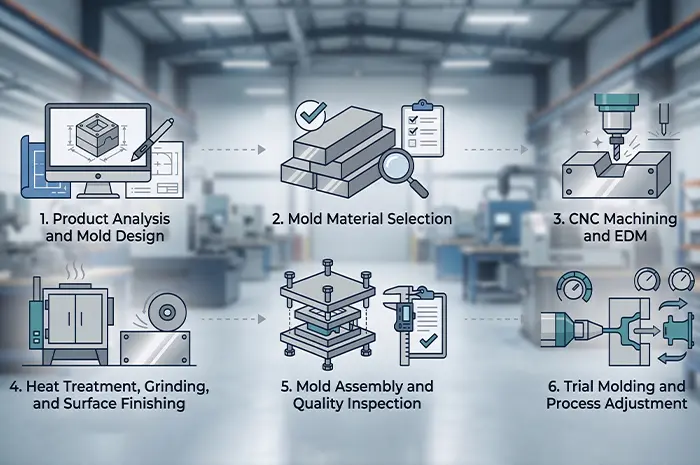
Before manufacturing an injection mold, engineers need to carefully analyze the plastic part design. The structure of the product determines the complexity of the mold and influences the molding process.
Several factors should be considered:
Uneven wall thickness may cause common molding problems such as sink marks, warping, and internal stress. Therefore, optimizing the plastic part design before mold manufacturing can reduce later production issues.
A professional mold supplier usually performs DFM (Design for Manufacturing) analysis to identify potential problems before machining starts.
The selection of injection mold steel has a direct impact on mold precision, service life, production stability, and final product quality.
At SHD, we select suitable mold steels, including P20, 718H, H13, S136, and STAVAX, according to product precision requirements, production volume, plastic raw materials, and surface appearance expectations.
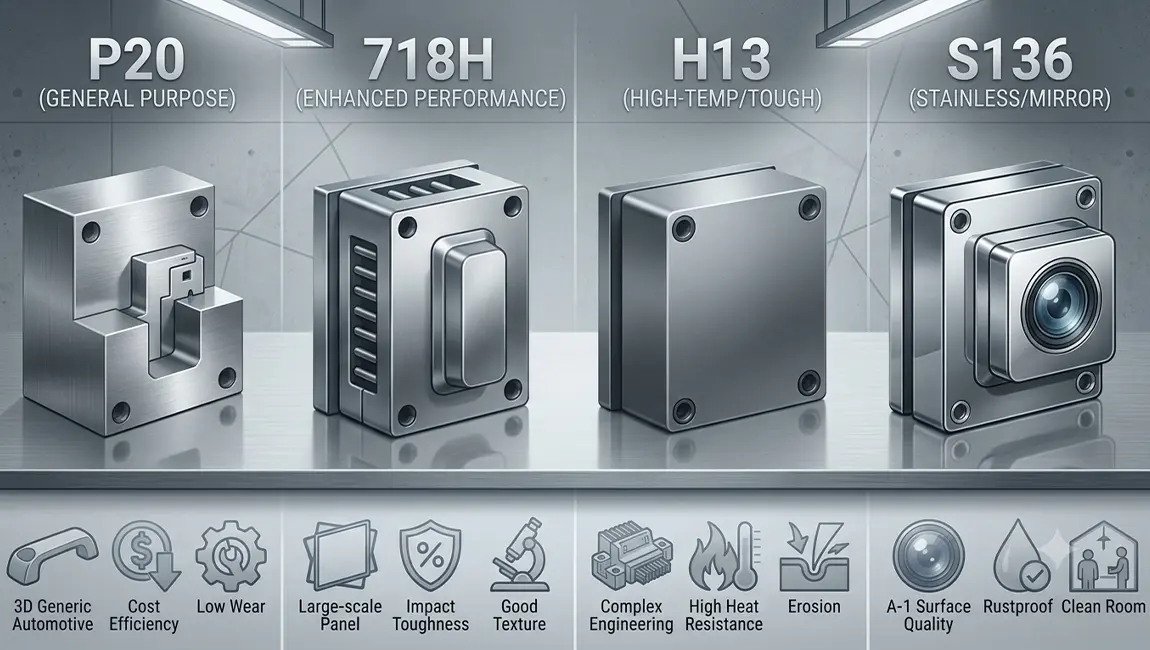
Different mold steels offer different performance advantages:
The hardness, toughness, and wear resistance of injection mold materials can vary significantly depending on steel selection and heat treatment processes. Therefore, proper material selection is essential for achieving stable molding performance and extending mold service life.
The injection gate design directly affects how molten plastic flows into the mold cavity. An improper filling system may cause defects such as short shots, weld lines, air traps, and uneven shrinkage.
Common gate designs include:
For complex plastic components, SHD engineers use professional mold flow analysis methods to optimize gate location and runner design. This helps improve filling balance, reduce material waste, and achieve better product appearance.
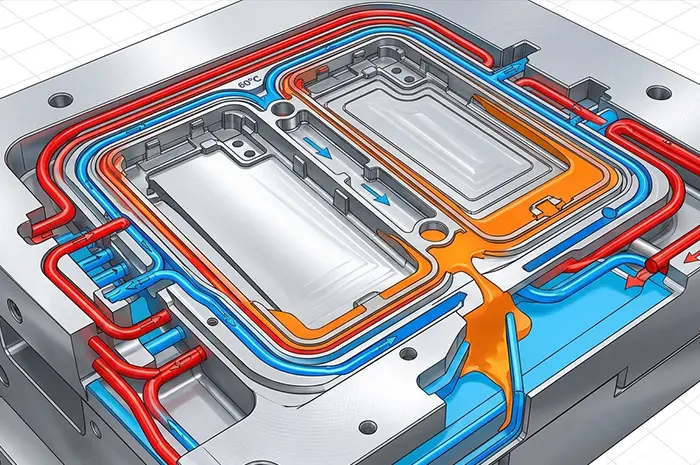
A well-designed cooling system is essential for improving injection molding efficiency.
During molding production, plastic parts must cool evenly inside the cavity. Poor cooling performance may result in:
SHD designs optimized cooling channels according to product structure and mold requirements. For complex components, advanced cooling solutions can further improve temperature control and molding stability.
The machining accuracy of an injection mold determines the final quality of plastic parts.
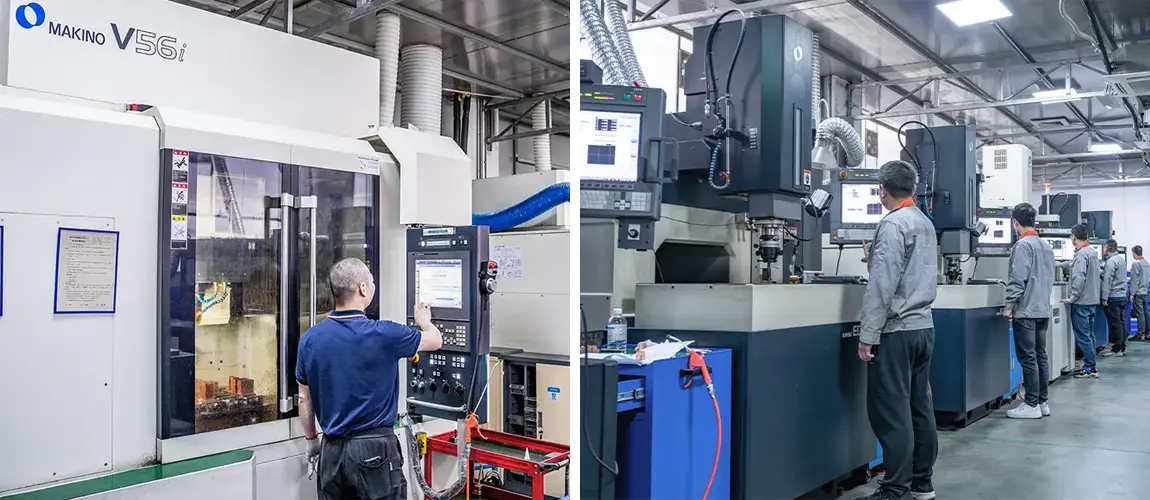
Modern mold manufacturing requires advanced equipment, including:
As a precision-focused injection mold supplier, SHD applies strict quality inspection throughout the manufacturing process. Each mold component is carefully measured and tested to ensure accurate dimensions and reliable performance.
This precision control is especially important for industries with strict requirements, such as automotive, medical, and electronics manufacturing.
Before delivery, every injection mold requires trial molding to verify performance.
During mold testing, engineers evaluate:
If improvements are needed, SHD engineers adjust molding parameters or optimize mold structures to achieve better results.
A professional mold supplier provides not only mold manufacturing but also technical support during testing and mass production.
Injection mold design is a key factor in achieving high-quality plastic parts production. From product analysis and mold material selection to cooling optimization and precision machining, every design detail influences molding performance.
With professional engineering experience and advanced manufacturing capabilities, SHD provides precision injection mold solutions for global customers in automotive, medical, electronics, and industrial applications.
By working with an experienced injection mold supplier, manufacturers can improve production efficiency, reduce manufacturing risks, and achieve consistent plastic part quality.
Q1: What is an injection mold?
A: An injection mold is a customized tool used to shape molten plastic into specific components through the injection molding process.
Q2: Why is injection mold design important?
A: Proper mold design improves product quality, reduces production defects, shortens molding cycles, and increases mold lifespan.
Q3: Why is a precision injection mold so expensive compared to rapid tooling?
A: High-volume production tools are built from hardened, high-grade tool steels engineered to withstand millions of clamp and injection cycles under extreme pressure.
Q4: What industries use precision injection molds?
A: Precision injection molds are widely used in automotive parts, medical components, electronics, consumer products, and industrial plastic applications.

Tel/Whatsapp: +86 15062600514
E-mail: sales@shdmold.com

Email: sales@shdmold.com
Address: NO.199, TongQiu Road, Zhangpu Town, Kunshan City, Jiangsu, China
Mobile: +86 15062600514