
What Is Automotive Injection Molding? Complete Technical Guide
2026-10-23


SHD specializes in one-stop service of general and high-precision tooling from design, processing & fabrication, tooling trail, mass production to supply chain management.
Excellence Manufacturing Every Time
The medical device landscape is shifting toward miniaturization and high-performance polymers. For OEMs (Original Equipment Manufacturers), selecting a medical device injection mold supplier is no longer just about price; it is about risk mitigation and extreme precision.
At SHD Precision, we have refined our manufacturing vertical to meet the “zero-defect” culture required for healthcare applications. From surgical instrument housings to complex fluid delivery components, the engineering behind the mold determines the safety of the end-user.
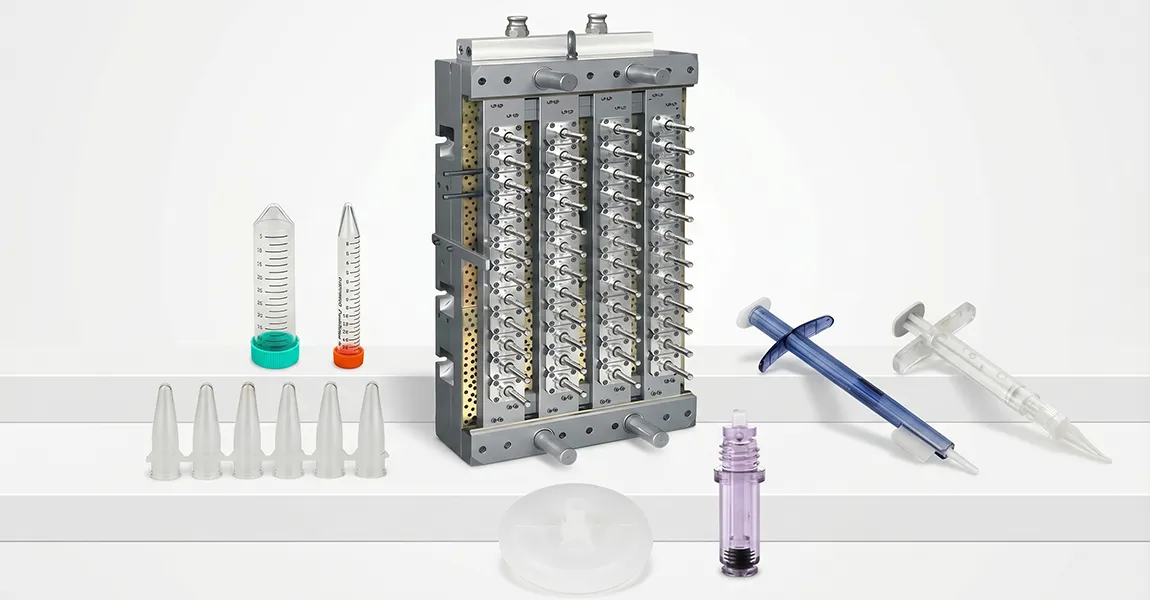
Medical molding requires more than standard industrial practices. It demands an understanding of specialized resins like PEEK, PPSU, and medical-grade Silicons. Our tooling process incorporates:
The critical nature of injection molds for medical devices stems from the fact that in the healthcare industry, the “margin for error” is often zero. Unlike consumer goods, a minor defect in a medical component can lead to device failure, compromised patient safety, or regulatory rejection.
Medical devices often involve micro-parts or assembly-critical components (like luer locks or syringe plungers). Molds must maintain tolerances as tight as ±0.01mm. Any deviation can lead to mechanical failure or leakage in life-saving equipment.
Medical molds must handle specialized resins (PEEK, COC, or medical-grade Silicone) that are sensitive to temperature and shear. The mold’s internal surfaces must be engineered to prevent material degradation, ensuring the final part remains non-toxic and biocompatible.
High-mirror polishing (SPI-A1 finish) is often required to eliminate micro-scratches where bacteria could harbor. Smooth surfaces are also vital for optical clarity in diagnostic tools and to ensure that fluid flow is not disrupted by friction.
Molds used for medical devices are designed for ISO Class 7 or 8 cleanrooms. This requires:
Successfully bringing a medical device to market requires a supplier that acts as a technical partner. By integrating DFM (Design for Manufacturing) early in the development phase, SHD helps clients avoid costly late-stage re-designs, ensuring that every medical component is consistent, compliant, and cost-effective.
Q1: How do you ensure the longevity of molds used for high-volume medical parts?
A: We use hardened tool steels and modular inserts. This allows high-wear areas to be replaced easily without scrapping the entire tool, ensuring millions of consistent cycles for components like tube connectors or caps.
Q2: What surface finishes are available for medical molds?
A: We offer everything from SPI-A1 diamond buff polishing for optical clarity to specific textures for ergonomic grips on surgical handles, all while ensuring the finish does not interfere with the part’s biocompatibility.
Q3: Can SHD assist with material selection for medical applications?
A: Absolutely. We provide technical guidance on how different resins (such as PC, COC, or TPE) will behave during the injection process, focusing on shrink rates and mechanical properties after sterilization.

Tel/Whatsapp: +86 15062600514
E-mail: sales@shdmold.com

Email: sales@shdmold.com
Address: NO.199, TongQiu Road, Zhangpu Town, Kunshan City, Jiangsu, China
Mobile: +86 15062600514