


How Precision Injection Molding Ensures Tight Tolerance Componen…
2026-10-14


SHD specializes in one-stop service of general and high-precision tooling from design, processing & fabrication, tooling trail, mass production to supply chain management.
Excellence Manufacturing Every Time
Uneven wall thickness is a common issue in injection molded products, often leading to defects such as shrinkage marks, warpage, sink marks, and internal stress. These problems not only affect product appearance but also compromise structural integrity and dimensional stability. To achieve high-quality and consistent production, it is essential to address wall thickness variation from design, mold, processing, and material perspectives.
For products with uneven wall thickness, solutions are typically addressed from the following key aspects:
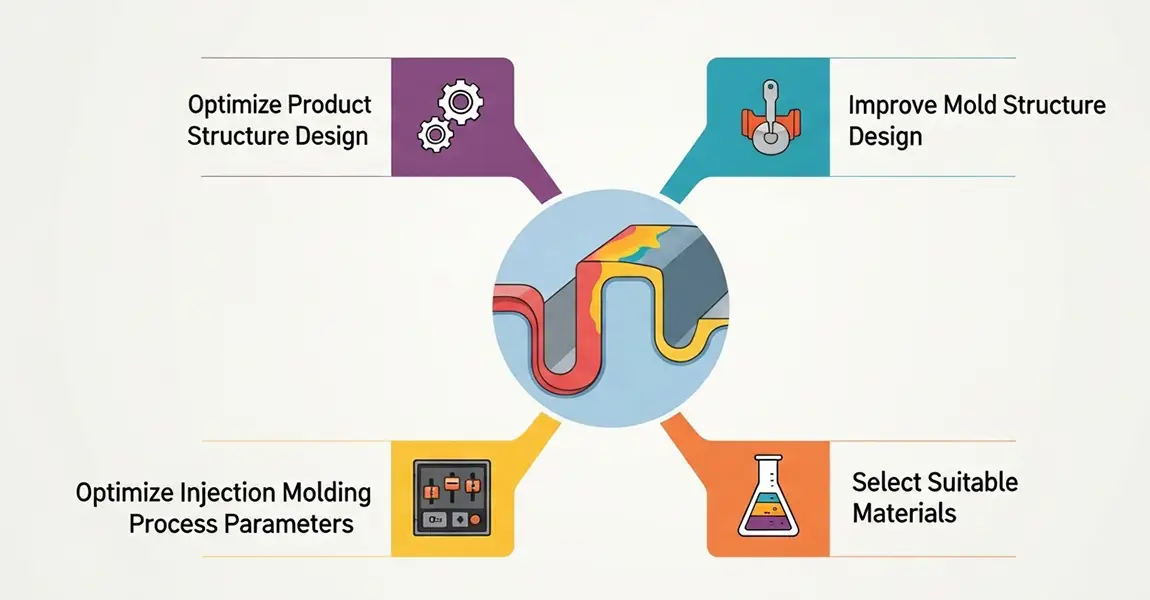
The first step is to evaluate the issue from the perspective of product design. Conducting a thorough DFM (Design for Manufacturability) review before mold development is essential. Designers should aim to keep wall thickness as uniform as possible and avoid large variations within the same part.
For thicker sections, material usage can be reduced by hollowing out the structure or replacing solid areas with reinforcing ribs. In some cases, advanced techniques such as gas-assisted injection molding can also be considered to improve wall thickness distribution.
Mold design plays a critical role in controlling wall thickness consistency. It is recommended to position the gate near thicker sections so that these areas are filled first, allowing better shrinkage compensation. Increasing the gate size appropriately can also help prevent shrinkage defects in thick areas.
Additionally, cooling channels should be more concentrated around thicker regions to enhance cooling efficiency. Since thick sections are prone to air traps, proper venting (such as vent grooves or inserts) must be incorporated to avoid surface defects and ensure smooth filling.
Process optimization is another key factor. A segmented injection approach can be adopted – using medium to high speed to fill thin sections first, then switching to lower speed when filling thicker areas to minimize shear differences.
Holding pressure and holding time should be increased appropriately to ensure adequate shrinkage compensation. At the same time, material temperature and mold temperature must be carefully controlled to avoid excessive shrinkage caused by overheating. Balanced mold temperature distribution also helps reduce internal stress and deformation.
When wall thickness variation is significant, material selection becomes especially important. Materials with low shrinkage rates and good flow properties—such as PC+ABS, PP+GF, and PA+GF—are recommended.
Glass fiber-reinforced materials can effectively reduce shrinkage differences and minimize deformation, improving overall dimensional stability.

Solving uneven wall thickness is not a single-step task but a systematic optimization process involving product design, injection mold engineering, process control, and material selection. By addressing these factors comprehensively, manufacturers can significantly reduce defects, improve product quality, and enhance production efficiency. Early-stage design optimization combined with precise process control is the key to achieving stable and reliable injection molding results.
Q1: What are the main defects caused by uneven wall thickness?
A: Uneven wall thickness can lead to sink marks, warpage, voids, internal stress, and dimensional instability. These defects may affect both appearance and mechanical performance.
Q2: Why should the gate be placed near thicker sections?
A: Placing the gate near thick areas ensures these sections are filled and packed first, allowing better shrinkage compensation and reducing the risk of sink marks or voids.
Q3: Can process parameters alone solve uneven wall thickness issues?
A: Process adjustments can help improve the situation, but they cannot fully compensate for poor product or mold design. A combined approach is always recommended.

Tel/Whatsapp: +86 15062600514
E-mail: sales@shdmold.com

Email: sales@shdmold.com
Address: NO.199, TongQiu Road, Zhangpu Town, Kunshan City, Jiangsu, China
Mobile: +86 15062600514


